
Have you ever looked in the mirror after your acne has cleared and wondered, “Are these acne marks or acne scars?”
It is a common question I hear from patients.
Although the terms are often used interchangeably, acne marks and acne scars are not the same thing. They look different, behave differently, and may need different approaches for treatment.
Understanding the difference is the first step toward choosing the right acne marks and acne scars treatment and avoiding treatments that may not be suitable for your concerns.
At Linaé, acne and acne scars are assessed based on the type, depth, severity and overall condition of the skin before deciding on treatment.
In this guide, I will explain how to tell them apart, why they develop, whether they fade on their own and when acne scar treatment may be needed.
What Are Acne Marks?
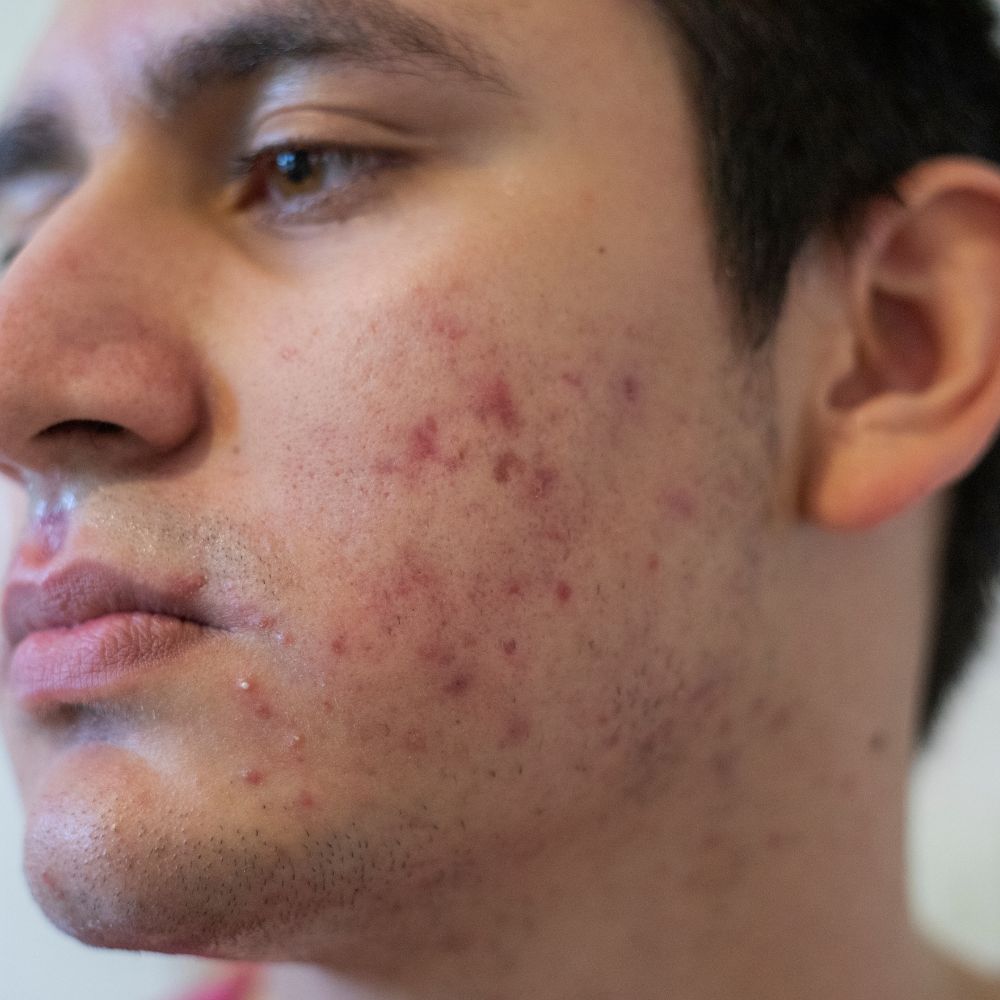
Acne marks are changes in your skin colour that remain after a pimple heals. They usually make the skin look darker, red, or pink, but the skin stays smooth and flat.
The two common types are:
1. Red or Pink Marks
These are often called post-inflammatory erythema (PIE). They may appear red, pink, or slightly purple, especially on lighter skin tones.
They happen because acne causes inflammation that affects the small blood vessels in the skin.
2. Brown or Dark Marks
These are known as post-inflammatory hyperpigmentation (PIH). They are more common in medium to deeper skin tones.
When acne causes inflammation, the skin may produce more pigment, leaving behind a brown or dark spot after the pimple has healed.
How Do Acne Marks Look?
Acne marks are generally:
- Flat and smooth
- Red, pink, brown, or dark
- Located where a pimple or acne lesion was present
- More noticeable after inflammatory acne
- Not associated with a permanent change in skin texture
The good news is that acne marks can often fade with time, although the process may take weeks or months.
What Are Acne Scars?
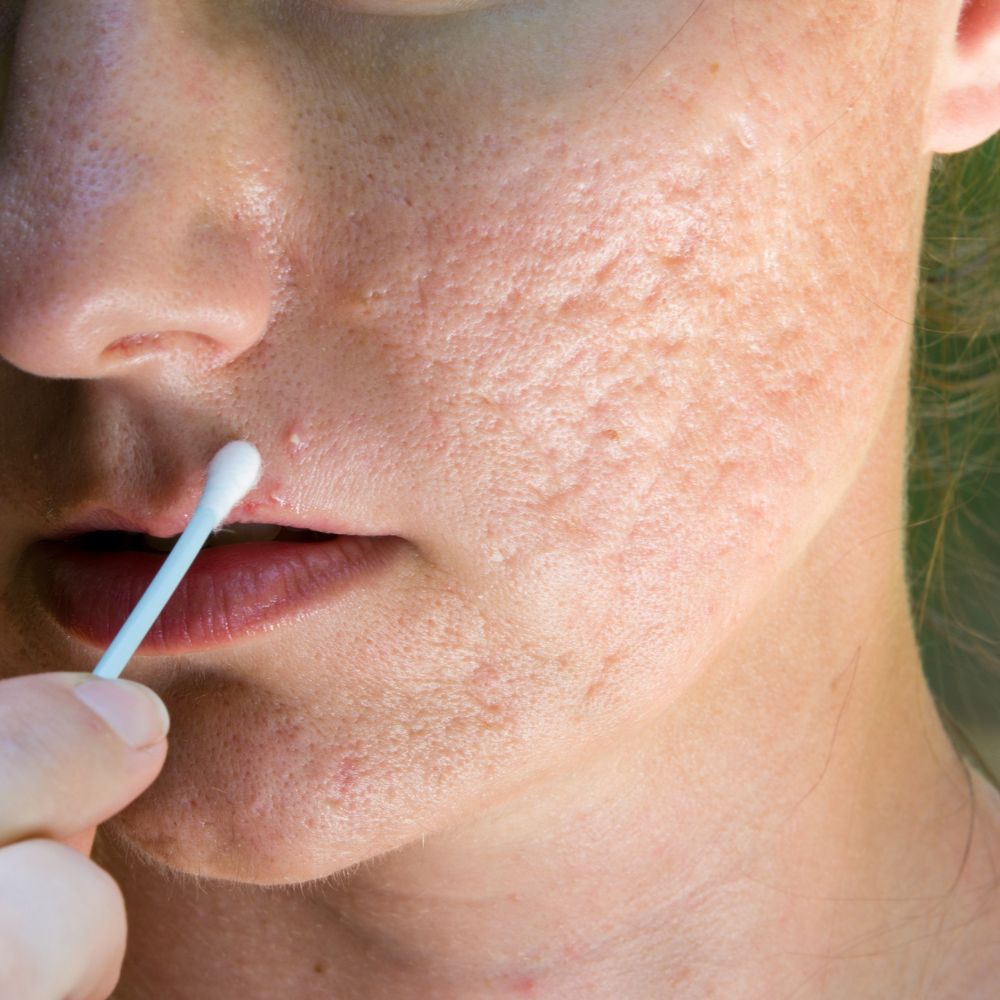
Acne scars are different because they involve a change in the texture or structure of the skin.
They can develop when deeper inflammation from acne damages the skin and affects collagen production during healing.
There are two broad types of acne scars:
Atrophic Acne Scars
These are depressed or indented scars caused by a loss of collagen.
Common types include:
- Ice pick scars: Small, narrow, deep openings in the skin
- Boxcar scars: Wider depressions with more defined edges
- Rolling scars: Broader depressions that give the skin an uneven or wavy appearance
- Raised Acne Scars
Some people develop excess scar tissue, resulting in raised scars. These are called hypertrophic scars or keloids, depending on how the scar behaves and extends.
Unlike acne marks, acne scars are not simply changes in skin colour. They involve a change in the skin’s texture and structure.
Acne Marks vs Acne Scars: What’s the Difference?
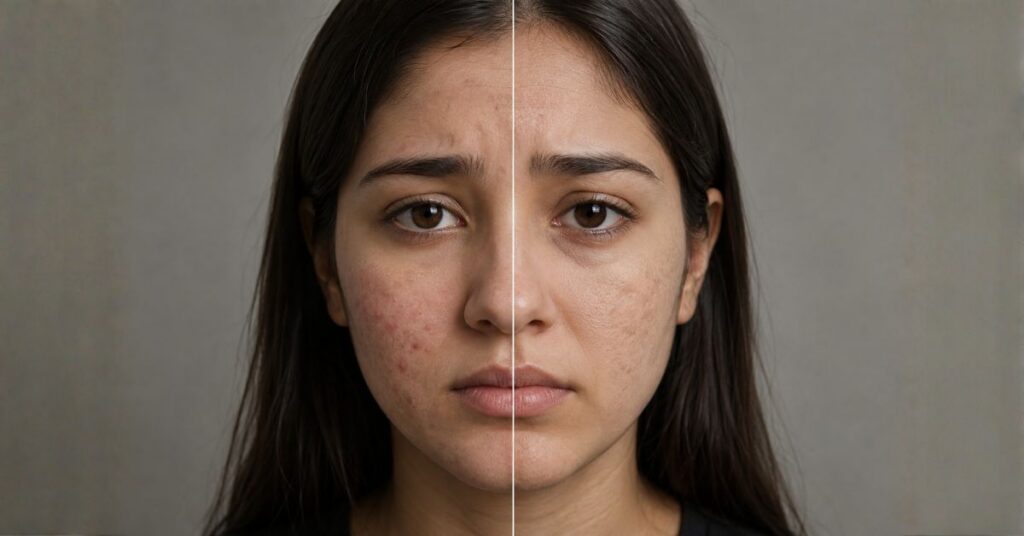
The easiest way to understand the difference is to look at the skin’s colour and texture.
Acne Marks vs Acne Scars: Difference?
The simplest way to tell them apart is to look at colour and texture.
| Feature | Acne Marks | Acne Scars |
| Appearance | Red, pink, brown or dark spots | Pits, depressions, uneven texture or raised areas |
| Texture | Skin remains smooth | Skin texture is altered |
| Main cause | Inflammation and changes in pigmentation or blood vessels | Damage to collagen and deeper skin tissue |
| Do they fade? | Often fade gradually | Usually persist without treatment |
| Treatment | Skincare and treatment of pigmentation may help | Often requires dermatologist-guided procedures |
| Common terms | PIH, post-acne pigmentation, PIE | Ice pick, boxcar, rolling or raised scars |
So, if you have a flat dark or red spot, it is more likely to be an acne mark.
If you can see or feel an indentation, depression, or raised area, it may be an acne scar.
Do Acne Marks Turn Into Acne Scars?
Not exactly. Acne marks and acne scars are different, but the same acne breakout can cause both.
A pimple may heal and leave behind a dark or red mark. If the acne was deeper or more inflamed and caused damage to the deeper layers of the skin, it can also result in an acne scar.
This can sometimes make it look like an acne mark has “turned into” a scar. In reality, the original acne lesion may have caused both pigmentation and textural scarring as the skin healed.
So, if a mark seems to become more noticeable or develops an uneven texture over time, it is worth having it assessed by a dermatologist.
Marks and scars may look similar, but they need different approaches to treatment.
For example, a painful, inflamed acne lesion may heal and leave behind a dark mark. If the inflammation was deep enough to damage the skin’s collagen, it may also leave an acne scar.
This is why it can sometimes feel like a mark has “turned into” a scar when, in reality, the acne caused both pigmentation and textural scarring.
Why Does Acne Cause Marks and Scars?
Not every pimple leaves a mark or scar. The risk can depend on several factors, including:
- Severity of Acne
Deep, painful acne such as nodules and cysts has a greater chance of causing long-lasting marks and scars.
- Skin Inflammation
The more intense the inflammation, the greater the chance of post-acne pigmentation and, in some cases, scarring.
- Picking or Popping Pimples
Trying to squeeze or pick acne can increase inflammation and trauma to the skin. This may increase the risk of both persistent marks and scarring.
- Individual Skin Response
Some people are more prone to developing pigmentation after inflammation, while others may be more prone to developing scars.
- Delayed Acne Treatment
Persistent or severe acne can continue to cause new inflammation. Treating active acne early can help reduce the risk of developing new post-acne changes.
How Long Do Acne Marks Take to Fade?
There is no fixed timeline for acne marks.
Some may become lighter within a few weeks, while others can take several months to fade. The duration can depend on the type of mark, skin tone, amount of inflammation, sun exposure, and skincare routine.
If marks are not improving or new acne continues to appear, a dermatologist can assess the skin and recommend an appropriate treatment plan.
What About Acne Scars?
Acne scars generally need a different approach from acne marks.
Because scars involve changes in skin texture and collagen, simply using products for pigmentation may not improve them significantly.
Depending on the type and severity of scarring, a dermatologist may consider procedures such as:
- Microneedling
- Microneedling radiofrequency (MNRF)
- Fractional laser treatments
- Subcision for selected depressed scars
- Chemical peels for appropriate skin concerns
- A combination of treatments for mixed acne scars
The right acne scar treatment depends on the type of scar, its depth, skin type, and whether active acne is still present.
How Can You Prevent Acne Marks and Scars?
You cannot prevent every acne mark or scar, but you can reduce the risk.
- Avoid Picking Your Pimples – Squeezing acne can increase inflammation and skin injury.
- Treat Active Acne – If new acne keeps appearing, treating only the marks left behind will not address the underlying problem.
- Protect Your Skin From the Sun – Sun exposure can make post-acne pigmentation more noticeable and may make dark marks take longer to fade. Regular sunscreen use is an important part of managing post-acne pigmentation.
- Follow a Consistent Skincare Routine –A simple, consistent routine is often better than frequently changing products or using multiple strong active ingredients at the same time.
- Get Professional Advice for Persistent Acne – If acne is painful, recurring, or leaving behind marks and scars, a dermatologist can help determine the appropriate treatment rather than relying on trial and error.
When Should You See a Dermatologist for Acne Marks or Scars?
You don’t necessarily have to wait until your acne becomes severe. I recommend considering a dermatology consultation if:
- Your acne keeps coming back
- You have painful or deep pimples
- Dark marks are not fading
- You have visible acne scars
- Your skin texture has become uneven
- You are unsure whether you have marks or scars
- Over-the-counter products are not helping
- Acne is affecting your confidence or daily life
An early assessment can help determine what you actually have and what treatment, if any, is appropriate.

A Dermatologist’s Take: Don’t Treat Every Post-Acne Spot as a Scar
One of the biggest mistakes I see is treating every dark spot after acne as an acne scar.
If your skin is smooth but discoloured, you may be dealing with post-acne pigmentation rather than scarring.
If you can see or feel a depression, pit, wave or raised area, you may have an actual acne scar.
And if you have both, the treatment plan needs to address both concerns.
The earlier we identify the difference, the easier it is to choose an appropriate approach rather than spending months trying products that are not designed to address the actual problem.
At Linaé – Skin, Hair & Aesthetic Clinic in Hyderabad, acne and post-acne concerns can be assessed to understand whether you are dealing with pigmentation, redness, textural acne scars, active acne or a combination of these concerns. Treatment can then be planned according to your skin and the type of acne-related changes present.
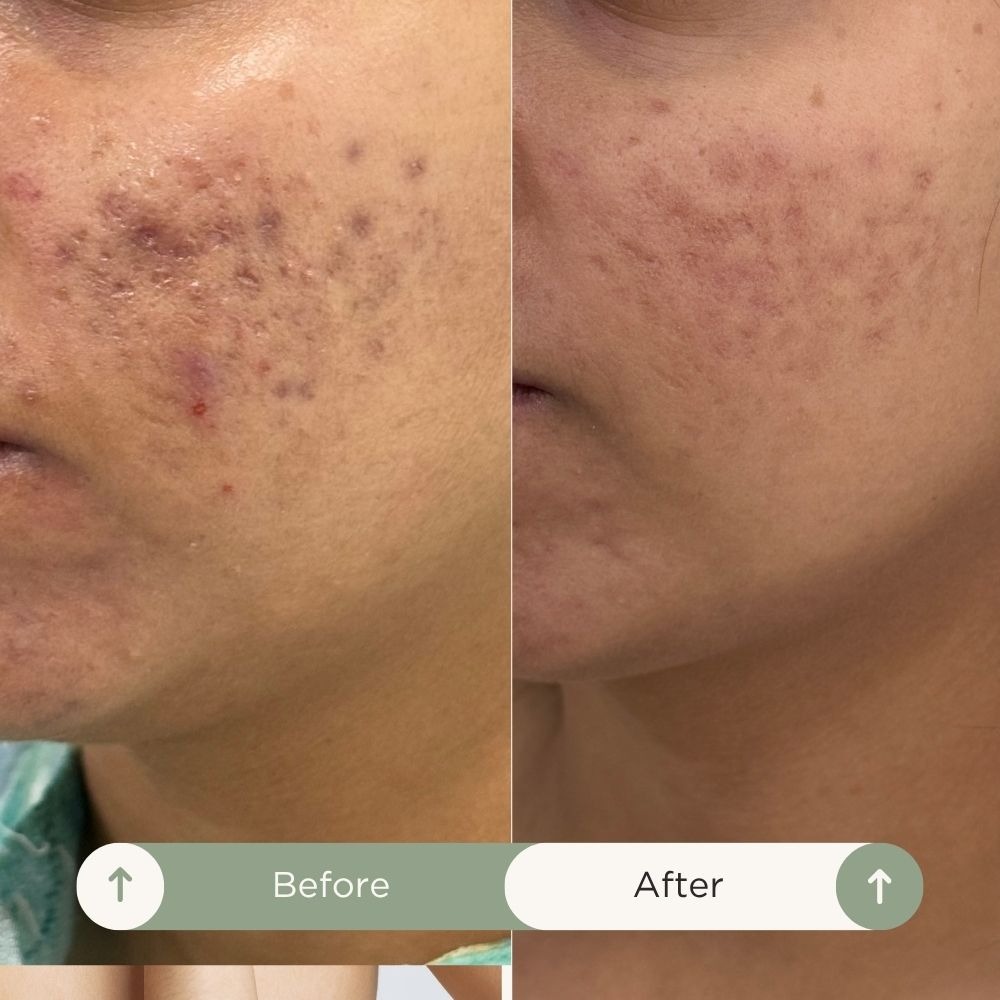
Conclusion
Acne marks and acne scars are not the same.
A flat red, pink, brown, or dark spot left after acne is usually a mark, while an indentation. or raised area that changes the texture of the skin may be an acne scar.
Marks may gradually fade as the skin recovers, while established acne scars often require targeted treatment to improve their appearance.
If you are unsure whether you have acne marks, acne scars or both, a dermatologist can assess the skin and explain what is realistically treatable.
At Linaé – Skin, Hair & Aesthetic Clinic, Jubilee Hills, Hyderabad, acne and acne scars are assessed individually so that treatment can be planned according to the patient’s skin, scar type and treatment goals.
Frequently Asked Questions (FAQ’S)
1. Do acne marks turn into scars?
No. Acne marks do not turn into acne scars. Marks are usually changes in skin colour, while scars involve a change in the skin’s texture or structure. However, the same acne breakout can cause both marks and scars.
2. How do I know if I have acne marks or acne scars?
If the area is flat and only the colour has changed, it is more likely to be an acne mark. If you notice an indentation, uneven texture, or raised area, it may be an acne scar.
3. Are dark spots after acne scars?
Not necessarily. A flat brown or dark spot after acne is usually post-inflammatory hyperpigmentation (PIH), which is an acne mark rather than a scar.
4. Can acne scars go away on their own?
Some mild post-acne changes may become less noticeable over time. However, established textural acne scars may persist and often require professional treatment for significant improvement.
5. What is the best treatment for acne marks?
Treatment depends on whether the mark is red, pink, brown, or dark and whether active acne is still present. A dermatologist can recommend an appropriate approach based on your skin.
6. What is the best acne scar treatment?
There is no single best treatment for every acne scar. Options may include procedures such as MNRF, microneedling, fractional laser, subcision, or combinations of treatments, depending on the scar type and severity.
7. Can popping pimples cause acne scars?
Picking or squeezing pimples can increase inflammation and skin injury, which may increase the risk of persistent acne marks and scars.
8. Can sunscreen help with acne marks?
Yes. Sun exposure can make post-acne pigmentation more noticeable and may delay its fading. Regular broad-spectrum sunscreen is an important part of managing acne marks.
9. Should I treat acne before acne scars?
In many cases, controlling active acne is an important first step. Otherwise, new acne lesions may continue to cause fresh marks and scars while existing scars are being treated.
10. When should I get acne scar treatment?
If acne scars are persistent, affecting your skin texture, or bothering you, it is worth getting a dermatologist’s assessment. Early evaluation can help identify the scar type and determine which treatment options may be suitable.